Theory No. 01

oneTHNGFidelity
Theory

Fidelity is a choice. Break it.

One knob. Two axes. Sample rate and bit depth move in opposite directions, making every position a different coordinate of digital fidelity. There is no neutral point, only different kinds of character.

Try free, 14 days

VST3 and AU. macOS and Windows. No iLok, no dongle, no account.

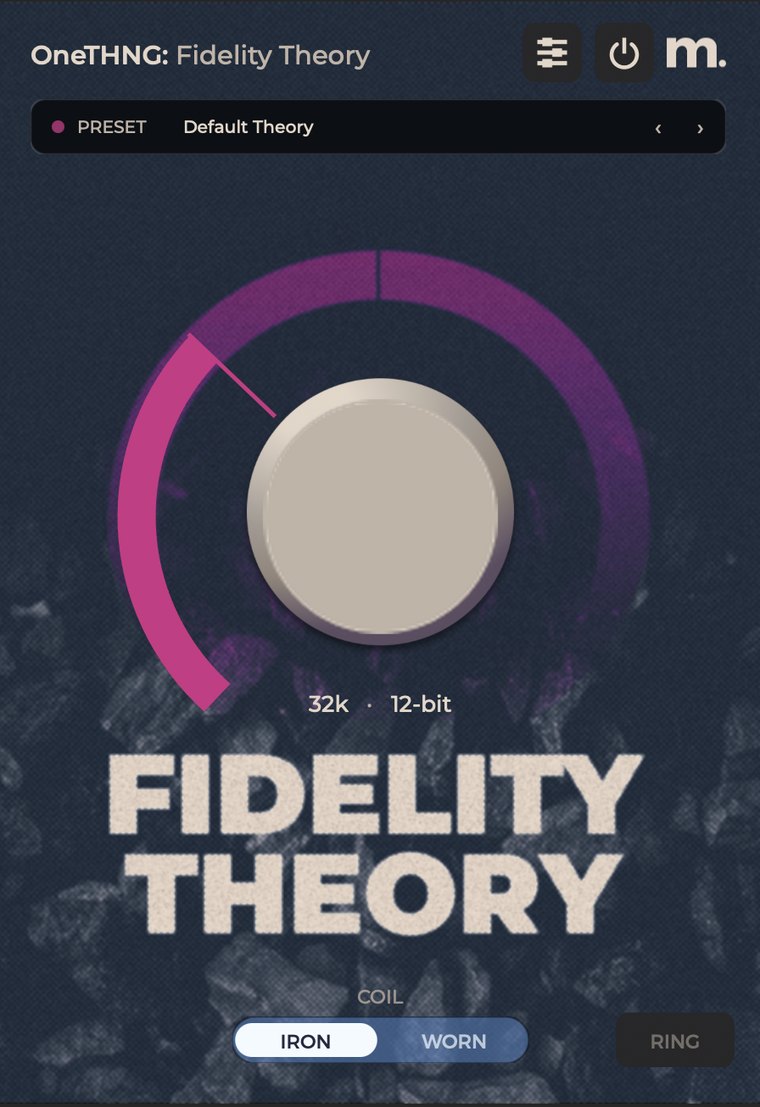
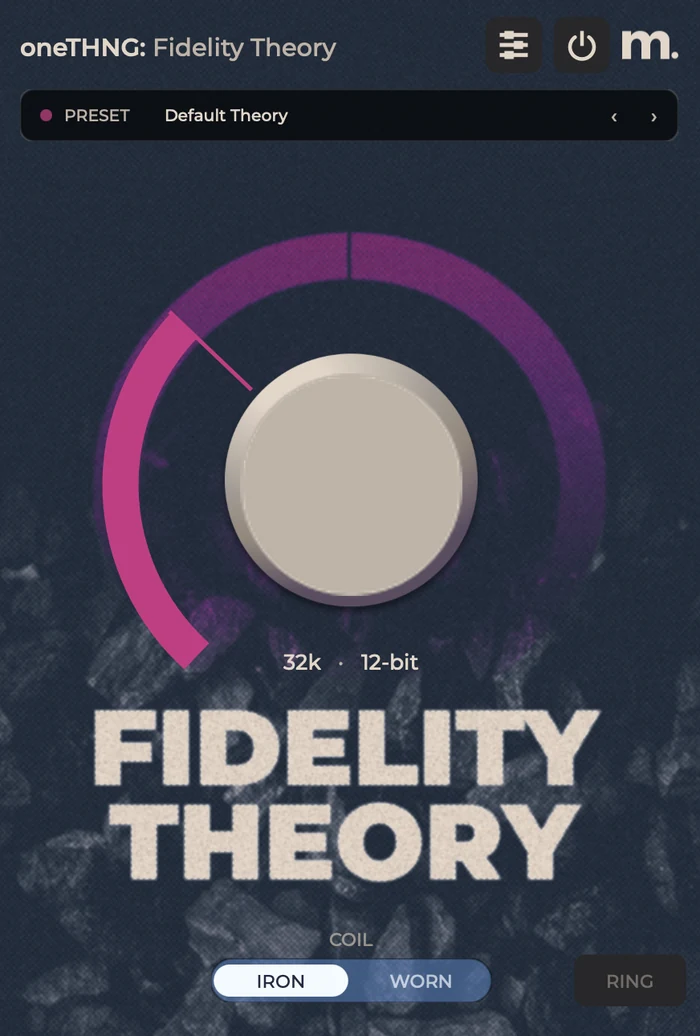
The oneTHNG Fidelity Theory plugin panel, showing the FIDELITY macro at 32k and 12-bit with the COIL switch below it.
48k · 6-bit to 6k · 16-bitOne sweep across the whole range, with 32k · 12-bit as the default coordinate.
A live coordinate, not a percentageThe readout under the knob names the sample rate and bit depth being imposed, whether or not audio is playing.
One knob, one switch, one buttonCOIL is the converter voicing, IRON or WORN. RING is the aliasing stage. No pages, no second layer.

One Theory. One Knob. oneTHNG™

Hear it

A/B it against your own ears

Hit BYPASS at any point and the untouched signal takes over without losing the playhead. Level is matched across the sweep in the plugin and in these renders, so what you hear change is character, never volume.

The Fidelity Theory panel

Now Playing  
 
0:000:00
Hearing wet
Space play or pause B toggle bypass All demos rendered at matched loudness.
The theory

One knob.
Two axes.

Every lo-fi tool you have used gives you a sample rate knob and a bit depth knob and asks you to go find the pair that sounds like a record. Not here. In the machines this sound came from, the two were never independent.

So they are welded back together and handed one control. Every position on the dial is a specific coordinate of the two.

Turning it down does not decrease the effect. It trades resolution for bandwidth.

Neither end is a clean setting.

The untouched signal is not on this knob at all. It is the power button in the top bar, and that is also what you should use for your A/B: comparing hard left against hard right tells you nothing about how much of the plugin you are using.

BIT DEPTH SAMPLE RATE
Sample rate
Bit depth

Live. Drag the slider, or jump with the buttons beneath it.

32k·12-bit
The coordinate, exactly as the plugin prints it
Bright · harsh · grit Dark · narrow · grain
Three controls

The interface

A knob, a switch and a button. Level is matched across the whole sweep, so moving the knob changes the character and not the volume.

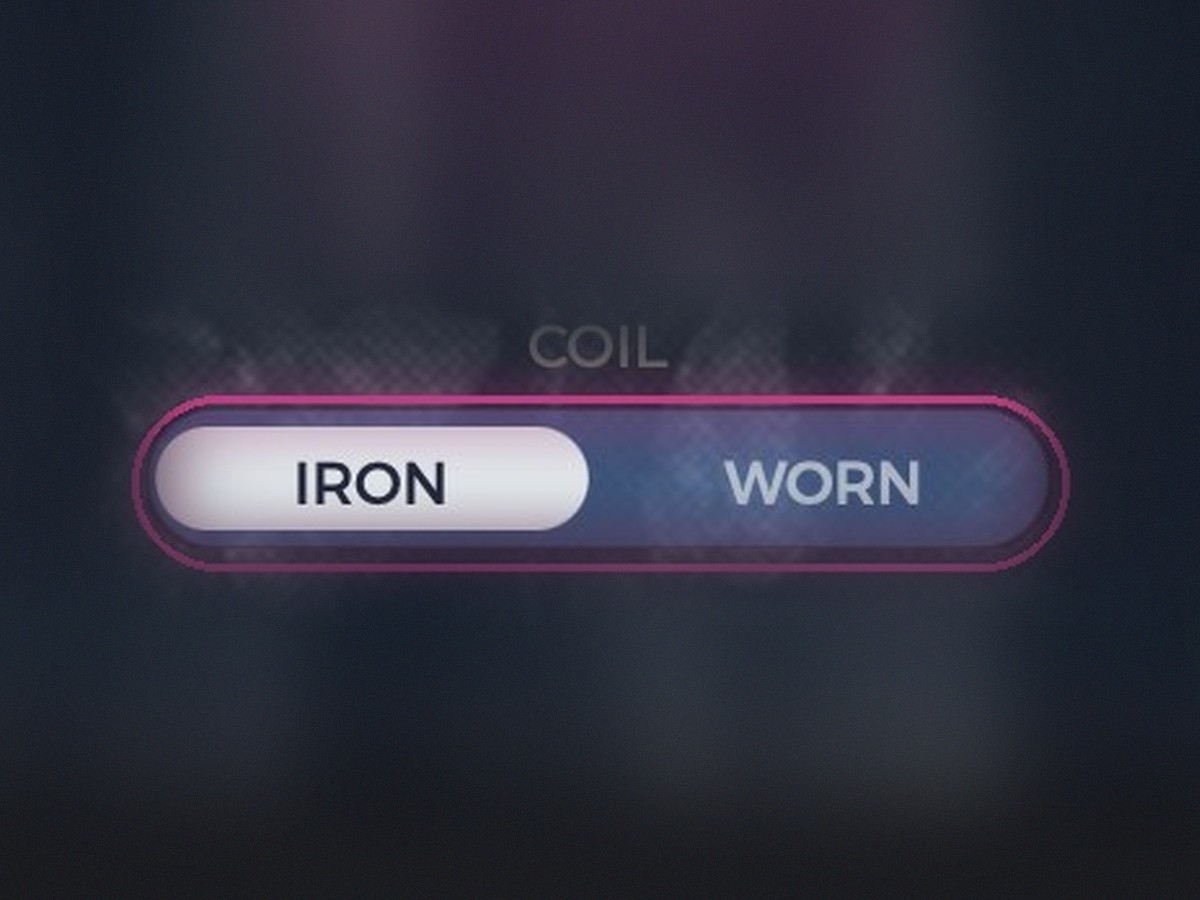
The COIL switch on the panel, set to IRON, with WORN alongside it.
COIL · IRON or WORN

The front end, before the maths

The converter voicing, always in circuit. IRON is an older machine, well kept. WORN is a tired one: fatter low mids, softened highs, and a whisper of converter grain scaled by the envelope. It sits ahead of both reduction stages, so the voicing is baked into the grit rather than sitting on top of it.
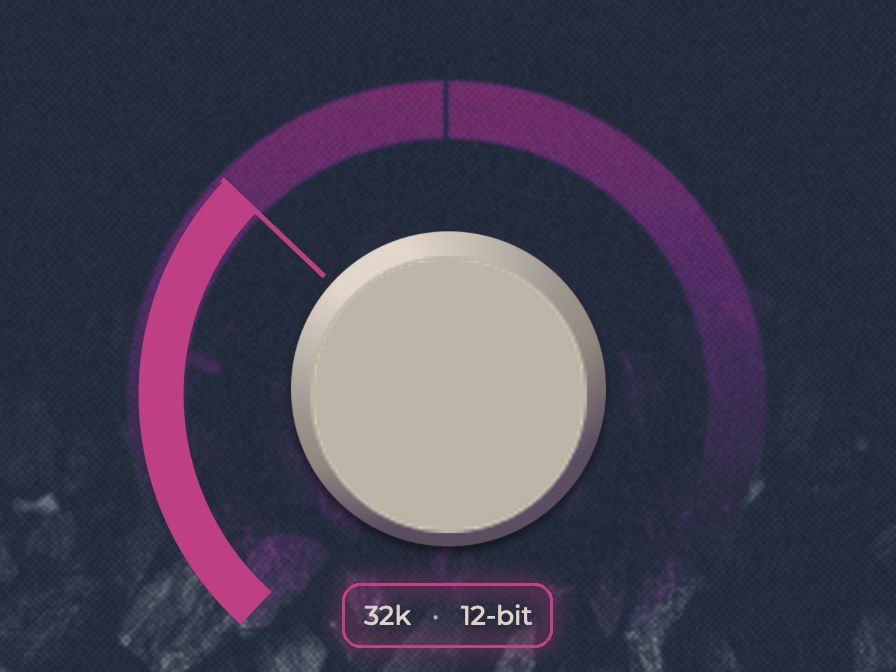
The FIDELITY knob and arc, with the coordinate readout beneath it reading 32k, 12-bit.
FIDELITY · the knob

Traverse the coordinates

Every position is a coordinate and none of them is neutral, so traverse it end to end rather than nudging around one point. The default lands on 32k · 12-bit, not pushed hard in either direction, a balance of bandwidth and resolution that makes it a useful place to start listening. Moves are smoothed and the switches crossfade, so you can sweep it across a bar while the track plays.

The RING button at the bottom right of the panel, alongside the COIL switch.
RING · aliasing

The signal being defeated

Drives the signal to make high harmonics, then decimates it with no anti-alias filter, so everything above the fold line comes back down as inharmonic metallic grit. The fold point tracks the sample rate the knob is producing, so it speaks at any position and not only at the extremes. Off is a starting point. On is a decision.

COIL›Bit depth›Sample rate›RING›Level match

Converter color first, so COIL changes what gets degraded rather than sitting on top of it. RING last, so it folds whatever the rest of the plugin has already made.

The oneTHNG series

Fidelity Theory is No. 01 of three. Two more Theories follow, one a month, each its own question and its own experiment.

See the series
Documentation

Read it before you buy it

No gate, no address, no waiting. Two editions, because a desk reference and a field book are not the same document. Read either one before you spend anything.

Formats VST3 · AU macOS 11+, Apple Silicon and Intel Windows 10+, 64-bit Full specs in the manual ›

Fidelity is a choice.
Break it.

Fourteen days at full quality. No account, no key, no card.

Try free, 14 days